For Therapists & Helping Professionals

Kesha Speaks is not therapy, and I never want my work to be confused with clinical care. I’m not here to diagnose anyone or tell a woman what choice to make. My lane is language, reflection, and pattern recognition. I help women put words to what they may already be feeling so they can bring more clarity into the deeper work they’re doing, whether that’s in therapy, in community, or in their own private reckoning.

If your clients have brought my videos, quotes, or workbook into session… you’re not imagining it.

I hear that a lot.

And honestly, it makes sense.

Kesha Speaks is built around helping women find language for experiences they’ve often felt for years but haven’t fully been able to name.

emotional clarity for women

What this work actually is

Kesha Speaks is a body of reflective content and clarity tools for women in the in-between.

A lot of the women who find this work know something is off, but they haven’t fully had the language for it yet. They’re trying to make sense of relationship dynamics, self-trust, emotional detachment, and the quiet realization that the way they’ve been surviving is costing them more than they want to admit.

A lot of that confusion isn’t random. It’s shaped by conditioning.

Many women have been taught to over-accommodate, over-explain, override their instincts, and call that maturity. A lot of that is personal, a lot of it is relational, and a lot of it is tied to patriarchy and the imbalances it trains women to normalize.

So yes, I talk about those patterns.

Not to make women more reactive.
Not to flatten every relationship into a villain story.
Just to help women see more clearly what they’ve been tolerating, carrying, and talking themselves out of.

What I share often gives women language for things they’re already feeling but haven’t fully named yet. That can help them slow down, catch patterns sooner, and come back to themselves with a little more honesty.

Language

Words for what she already feels

Pattern recognition

Seeing the dynamic more clearly

Grounding

Enough steadiness to actually think

Why therapists are already sending women here

From what I’ve heard from followers, some therapists have shared my content or recommended the workbook because it helps women put words to what they’ve been struggling to say.

That makes sense to me.

A lot of this work lives in the space between sensing that something is off and being able to name why. Because it comes from reflection instead of abstraction, women often recognize themselves in it pretty quickly.

And that recognition can be useful.

It can help some women come into the room more honest, more aware, and more ready to engage the deeper work they’re already doing.

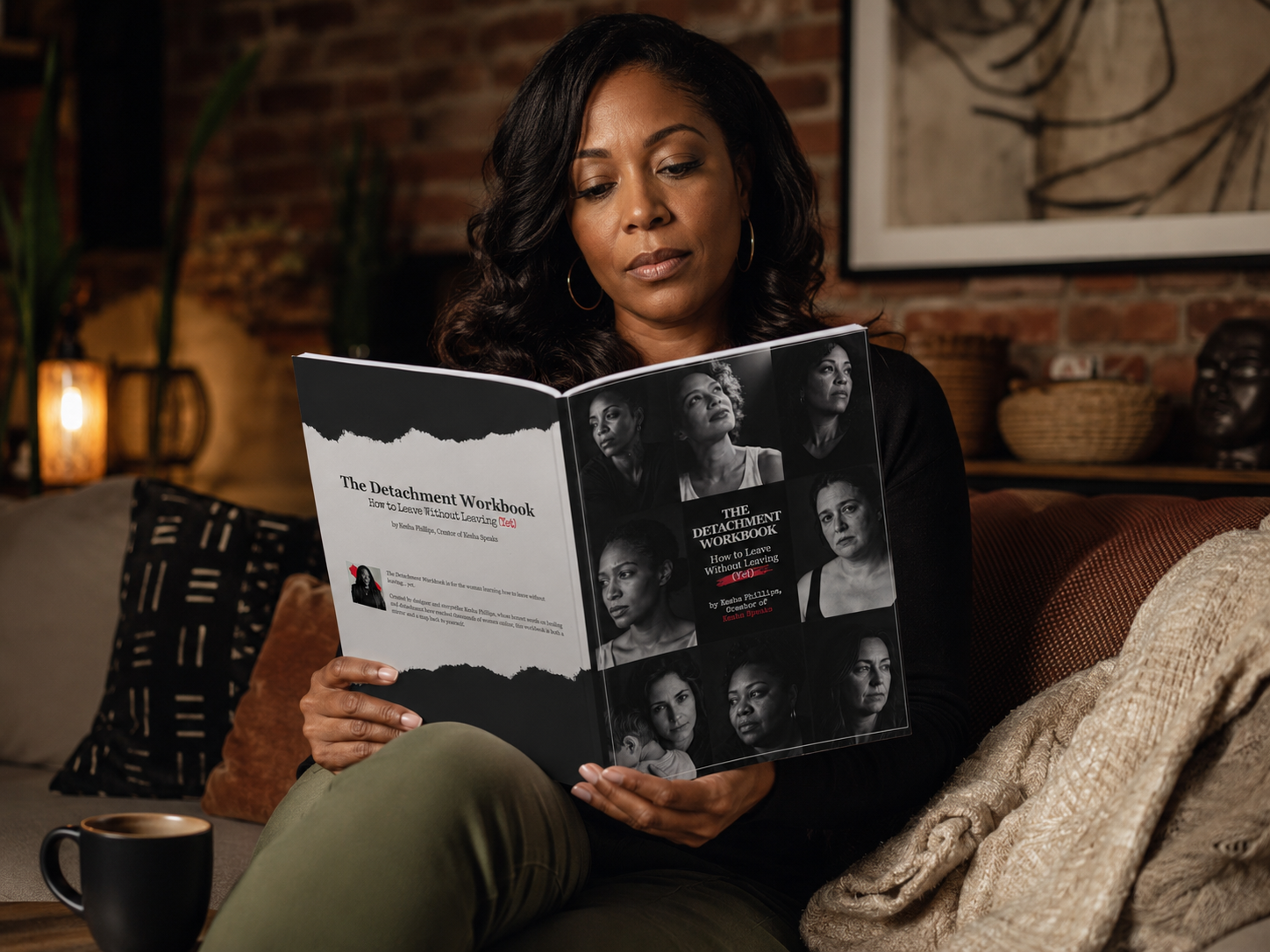
About the Workbook

The Detachment Workbook was written for women in the in-between.


The women who are still in it.
Still coexisting. Still carrying the emotional weight of something they may already know isn’t aligned anymore. Still trying to stay grounded enough to think clearly.


It was shaped by reflection, intentional research, therapy-informed insight, and the real questions women kept asking me over and over.


The workbook doesn’t tell a woman what decision to make.

What it does is offer structure, language, and practical prompts that can help her get centered enough to understand what she knows, what she needs, and what her next step may be.


That’s why a lot of women describe it as something that helped them stop spiraling, hear themselves more clearly, and move from emotional reaction toward clarity.

If you've been referring women here, thank you.

I take that trust seriously.


My goal isn’t to replace clinical care. It’s to offer women language, reflection, and grounded tools that help them hear themselves more clearly and move with more steadiness.